
Mūsā ‘alaihissalam stood before Allāh, knowing he was about to be sent to the most dangerous man on earth. The same man who murdered people. The same man who drowned children. The same man who, years ago, put a burning coal in Mūsā’s own mouth and scarred his tongue for life.
And now Allāh says: Go to him.
And Mūsā ‘alaihissalam feels the same fear we all feel before standing in front of a tyrant of our respective times. The same tightening of the chest. The same voice inside saying: I cannot do this.
And he pleads to his Lord:
“Rabbi ishrah li sadri, Wa yassir li amri, Wahlul ‘uqdatan min lisāni, Yafqahū qawlī.“
My Lord, uplift my heart for me. And make my task easy for me. And remove the impediment from my tongue so they may understand my speech.
— Qur’ān 20:25-28
Mūsā ‘alaihissalam was a prophet, Kalīmullāh. He spoke directly to Allāh. He had seen miracles. He had a staff that turned into a serpent. His hand shined white with light. And still, he stood before his Lord, feeling the same fear we feel, and said: I cannot do this unless You help me.
Now look at Sūrah Ash-Sharh. Allāh says to Rasūlullāh ﷺ, and through him to us:
“Have We not uplifted your heart for you?”
— Qur’ān 94:1
And then Allāh gives a command:
“So once you have fulfilled ˹your˺ duty, strive in ˹the way of the Lord˺. And turn to your Lord ˹alone˺ with hope.”
— Qur’ān 94:7-8
This does not mean Allāh will give you exactly what you worked for.
It means you put in your work, sincerely and completely, and then you place your trust in Him to give you what is best for you. Not what you want. What is best.
Sometimes the job you wanted would have destroyed your faith. Sometimes the person you begged for would have led you away from Allāh. Sometimes the door you kept knocking on was never meant to open because behind it was not mercy but ruin.
The believer strives. Then the believer trusts. Then the believer hopes, not for a specific outcome, but for His outcome. Because we plan, and Allāh plans; and Allāh is the best of planners.
And Allāh says in the Qur’ān:
“Perhaps you dislike something which is good for you, and love something which is bad for you. Allāh knows and you do not know.”
— Qur’ān 2:216
So do your part. Exhaust your effort. Then turn to your Lord alone with hope. Surely, in that you will find your path from struggle to ease.
And when you face your tyrants, say to your Lord:
Rabbi ishrah li sadri.
My Lord, uplift my heart for me.
Wa yassir li amri.
And make my task easy for me.
Wahlul ‘uqdatan min lisāni.
And remove the impediment from my tongue.
Yafqahū qawlī.
So they may understand my speech.
And know the promise of Allāh:
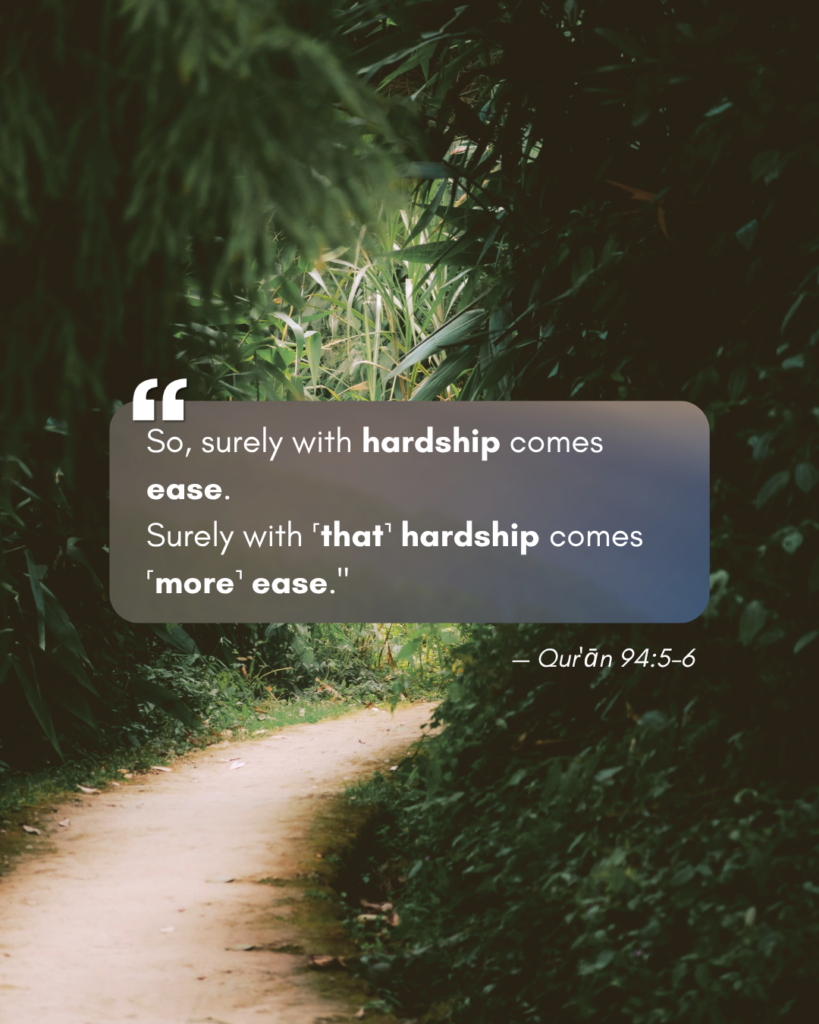
“So, surely with hardship comes ease. Surely with ˹that˺ hardship comes ˹more˺ ease.”
— Qur’ān 94:5–6
May Allāh azza wa jall uplift our hearts when fear tightens them, make our tasks easy when they feel impossible, and remove the knots from our tongues when we need to speak the truth.
O Allāh, when we stand before our tyrants, do not let us stand alone. Grant us the courage of Mūsā ‘alaihissalam and the certainty that ease comes with hardship.
Teach us to strive sincerely, then trust completely, then hope only in You—not in our desired outcome, but in what You know is best for us.
And even if we do not get the desired outcome, help us understand that there is wisdom and mercy behind the delay. And when the ease arrives, do not let us forget.
Āmīn yā Rabb al-‘Ālamīn, bi rahmatika yā Arḥam ar-Rāḥimīn.

Pingback: The Seven Under the Shade of Allah on Judgment Day
Pingback: Lā Ilāha Illallāh – Negating the World, Affirming the Ghayb