Rasūlullāh ﷺ said:
“It used to be from the supplication of Dāwūd that he would say: ‘O Allāh, indeed I ask You for Your love and the love of those who love You, and for the action that will cause me to attain Your love. O Allāh, make Your love more beloved to me than myself, my family and cold water.'”
— Jāmi’ at-Tirmidhī (3490), classed as ḥasan by Imām at-Tirmidhī
And within the same narration, Rasūlullāh ﷺ said about Dāwūd ‘alaihissalam:
“He was the best in worship out of all men.”
— Jāmi’ at-Tirmidhī (3490)
Ibn al-Qayyim (rahimahullāh) explained that the dīn is like a bird. The love of Allāh is its head. Without a head, the bird is dead. Fear of Allāh and hope in His mercy are the two wings. If one wing is larger than the other, the bird will not fly properly. Both fear and hope are born from love. A mu’min loves Allāh so deeply that he hates to displease Him. He fears hurting the relationship he has with his Lord. And yet, he knows that his Lord is Ar-Raḥmān, Ar-Raḥīm.
Dāwūd ‘alaihissalam, the best in worship among men, understood this. He did not ask for power. He did not ask for wealth. He asked for love. Because he knew that when Allāh loves a servant, everything good in this world and the next follows naturally.
Allāh reveals one of His most beautiful names in Sūrah al-Burūj:
“And He is Al-Ghafūr, Al-Wadūd (the All-Forgiving, the All-Loving).”
— Sūrah al-Burūj (85:14)
Al-Wadūd. The Loving. The One who loves His believing servants. And in Sūrah Maryam, Allāh says:
“Indeed, those who believe and do righteous deeds, Ar-Raḥmān will bestow upon them love.”
— Sūrah Maryam (19:96)
Love from Ar-Raḥmān. Love from Al-Wadūd. This is what Dāwūd was asking for. Not just to love Allāh, but to be loved by Him.
The Love of Al-Wadūd
Rasūlullāh ﷺ narrated that Allāh ʿazza wa jall said:
“Whoever shows hostility to a pious worshipper of Mine, I declare war against him. The most beloved things with which My slave comes nearer to Me are what I have enjoined upon him. My slave keeps on coming closer to Me through performing nawafil (voluntary deeds) until I love him. When I love him, I become his hearing with which he hears, his sight with which he sees, his hand with which he grips, and his leg with which he walks. If he asks Me, I will give him. If he asks My protection, I will protect him. I do not hesitate to do anything as I hesitate to take the soul of the believer, for he hates death, and I hate to disappoint him.”
— Ṣaḥīḥ al-Bukhārī (6502)
Pause here. Let this settle. The Love of Al-Wadūd.
Allāh, Rabb al-‘Ālamīn. The Lord of all worlds. The One who owns everything in the heavens and the earth. The One who never hesitates in any matter. He creates. He destroys. He gives life. He takes life. He never hesitates.
And yet, when it comes to the believing servant whom He loves, He says: I hesitate. This hesitation is not indecision or uncertainty. Allāh is free from any flaw or imperfection. Rather, it is a hesitation of care, of mercy, of love that befits His Majesty and Honor. He delays taking the soul out of consideration for the believer who hates death. He hates to disappoint His beloved servant.
This is beyond comprehension. This is the station of love. When Allāh loves a servant, He does not just protect him. He does not just answer his du’ā. He hesitates to disappoint him. He guides him in all his faculties: he hears with the light of Allāh, sees with the light of Allāh, acts with the light of Allāh. This means the mu’min no longer relies on his own limited perception; he is guided by Allāh. He discerns truth from falsehood. He is not deceived by the illusions of this world.
This is what Dāwūd ‘alaihissalam was striving for. This is what we should strive for.
The Path to Love
Dāwūd ‘alaihissalam asked for three things, in order.
First: Ḥubbaka – Your love.
Second: Ḥubba man yuḥibbuka – The love of those who love You.
Third: Al-ʿamal alladhī yuballighunī ḥubbak – The action that will deliver me to Your love.
The hadith of Bukhari confirms this path. First, the obligations (farā’iḍ). Then, the voluntary deeds (nawāfil). Through sincere obedience, the servant draws closer to Allāh. And when Allāh loves him, He grants him the highest gift: His guidance and protection.
And When You Face Calamity
When Allāh loves a servant, whatever you encounter that seems difficult, that feels like a calamity, is a test He sends your way to raise you in ranks, to erase your sins, to reward you in the Hereafter, and to increase His mercy upon you.
Allāh ʿazza wa jall declares:
“We will certainly test you with a touch of fear, hunger, loss of wealth, lives, and provision. And give glad tidings to the patient.”
— Sūrah al-Baqarah (2:155)
He announces the test and immediately follows with glad tidings. Every hardship is an invitation to rise. For a deeper exploration of how Allāh raises the ranks of the patient and replaces loss with something better, read the full article:
From Calamity to Glad Tidings – The Promise of Allāh
🔗 https://www.pathstopurity.org/from-calamity-to-glad-tidings-the-promise-of-allah/
The Ultimate Request
Dāwūd ‘alaihissalam then made the ultimate request:
Allāhumma ijʿal ḥubbaka aḥabba ilayya min nafsī, wa ahlī wa min al-mā’il-bārid.
“O Allāh, make Your love more beloved to me than myself, my family and cold water.”
Cold water is the symbol of physical relief. The thing the body craves most in the heat of the desert. Dāwūd asked that the love of Allāh be more beloved to him than even that.
This is the station of the prophets. This is the love that Al-Wadūd grants to His chosen servants.
Make It Your Du’ā
The Prophet ﷺ narrated this du’ā to the Ummah. He wanted us to know it. He wanted us to say it.
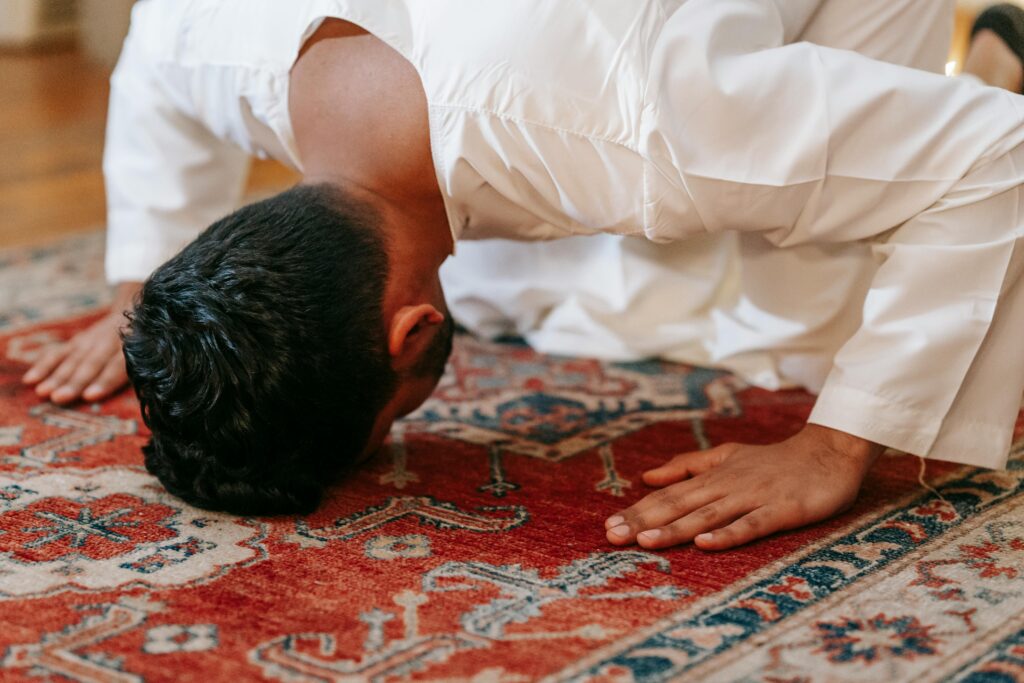
So say it. In your sujūd. In the last third of the night. When your heart feels hard and you long for softness. Say it as Dāwūd ‘alaihissalam said it.
May Allāh Al-Wadūd grant us His love and the love of those who love Him. May He guide us to the actions that lead to His love. And may He make us among those whom He loves and who love Him.
Āmīn yā Rabb al-‘Ālamīn, bi rahmatika yā Arḥam ar-Rāḥimīn.