Many of us, knowingly or unknowingly, willingly or unwillingly, have abandoned aṣ-ṣalāh for years. Maybe even decades. And some of us often wonder what to do about years of missed prayers.
The weight of such heedlessness can sometimes be too much to bear.
Shayṭān promised:
“By Your might and majesty, I will mislead them all, except Your sincere servants among them.”
— Based on Sūrah Ṣād (38:82‑83)
Then, deep in the heart, comes the whisper:
“I am too far gone. Already missed decades of ṣalāh. I am going to Jahannam anyways. Then what’s the point of starting to pray now!”
That right there is the most dangerous thing one can do. That is despair in the mercy of Allāh.
Do not misunderstand. Abandoning ṣalāh is a major sin. Rasūlullāh ﷺ said:
“Between a slave of Allāh and disbelief is abandoning the ṣalāh.”
— Jāmi‘ at‑Tirmidhī (2618), classed as ṣaḥīḥ by Shaykh al‑Albānī
The Majority View
The majority of scholars hold that every missed prayer must be made up individually. It is considered a debt owed to Allāh. For a person who missed prayers for decades, this can often feel overwhelming and, in cases I have personally witnessed, can lead some people into further despair.
This is not to say that the majority scholarly view is wrong. It is a valid position based on evidence, and many sincere Muslims follow it and find peace in it. But for others, the weight of calculating thousands of missed prayers becomes an impossible burden.
Instead of bringing them back to prayer, this despair pushes them further away. They think: “I will never be able to make up all those prayers. So why try?” And they remain trapped in sin, hopeless, still not praying.
Shayṭān loves this outcome. He wants you to feel that the door is closed.
But Allāh says:
“Say, O My servants who have transgressed against themselves, do not despair of the mercy of Allāh. Indeed, Allāh forgives all sins. Indeed, He is the All‑Forgiving, the Most Merciful.”
— Sūrah az‑Zumar (39:53)
And Rasūlullāh ﷺ said:
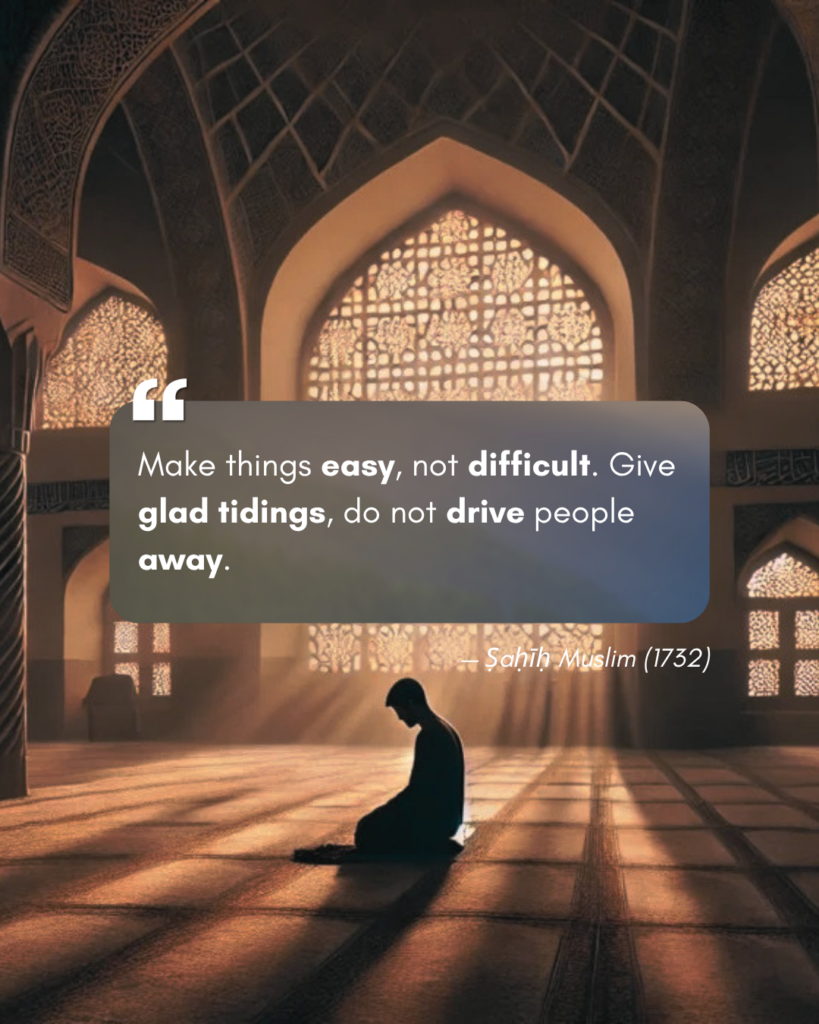
“Make things easy, not difficult. Give glad tidings, do not drive people away.”
— Ṣaḥīḥ al‑Bukhārī (69) and Ṣaḥīḥ Muslim (1732)
A Scholarly Position Centered on Sincere Repentance
Shaykh Ibn Bāz (رحمه الله) was asked about a person who missed years of prayers. He replied:
“What is correct is that it is not upon you to make up your prayers and a sincere repentance will be enough. This should include, feeling sorry for what occurred, being firm in making your prayers, and a firm resolution to not return to leaving off the prayer.”
— Shaykh Ibn Bāz (رحمه الله)
He supported this with the Qur’ānic verses:
- “Say to the disbelievers, if they cease (from disbelief), what has passed will be forgiven them” (8:38)
- “And repent to Allāh all together, O believers, that you may succeed” (24:31)
- “O you who believe, turn to Allāh with a sincere repentance” (66:8)
And with the statements of the Prophet ﷺ:
- “Islām wipes out what came before it and repentance wipes out what came before it” (Muslim)
- “The one who repents from sin is like the one who does not have any sin” (Ibn Mājah)
Source: SalafiTalk.Net (preserved fatwa of Shaykh Ibn Bāz)
Shaykh Assim al‑Hakeem, a graduate of Umm al‑Qura University in Makkah and King Abdulaziz University, holds the same position. He states that prayers missed deliberately for no legitimate reason cannot be made up. Instead, sincere repentance wipes the slate clean, based on the authentic hadith that distinguishes forgetfulness and sleep from deliberate abandonment:
“Whoever forgets a prayer or sleeps through it, then let him pray it when he remembers. There is no expiation for it other than that.”
— Ṣaḥīḥ al‑Bukhārī, and Ṣaḥīḥ Muslim with the addition “or sleeps and misses it”
Some scholars held that deliberately abandoning prayer constitutes disbelief, and based on that understanding they argued that sincere repentance erases what came before. Based on this view, the missed prayers from before repentance are erased, just as previous sins are erased when a disbeliever accepts Islām.
Both scholars affirm that abandoning prayer is a major sin. But both also affirm that Allāh’s mercy, upon sincere repentance, is greater than the burden of making up thousands of prayers – for the one who has already turned back.
Conclusion
There is a difference of opinion among scholars. If you follow the majority view, then strive to make up your missed prayers as you are able. But if that path leads you to despair and abandonment of prayer altogether, then know that there is a different recognized scholarly opinion. Allāh knows your sincerity and your limits.
Rasūlullāh ﷺ said:
“Make things easy, not difficult. Give glad tidings, do not drive people away.”
If you have missed years of ṣalāh and feel hopeless, do this today:
- Stop delaying. Turn to Allāh right now.
- Make sincere tawbah in your heart. Regret what you have done.
- Say the Shahādah with conviction: Ashhadu an lā ilāha illallāh wa ashhadu anna Muḥammadan rasūlullāh.
- Resolve firmly never to miss another ṣalāh intentionally.
- Pray two rak‘ahs of Ṣalāt al‑Tawbah.
- Trust in Allāh’s mercy. He said: “Indeed, Allāh forgives all sins.”
- Increase in voluntary prayers, istighfār, righteous deeds, and consistency in worship as a sign of sincere repentance.
This is a door of hope. Do not let Shayṭān keep you locked out.
Turn back. Allāh accepts the repentance of His servants, He forgives all sins.
⚠️ Footnote – A Serious Caution
This article is not a license to deliberately abandon prayer with the intention of “repenting later.” No one is guaranteed tomorrow. The ruling discussed applies only to those who have already fallen into years of missed prayers and feel trapped in despair. Using it as a plan to sin invalidates the sincerity of repentance, and the ruling would not apply. And Allāh knows best.
May Allāh accept our repentance, forgive our past, and keep us firm upon ṣalāh until we meet Him.
Āmīn yā Rabb al‑‘Ālamīn, bi rahmatika yā Arḥam ar‑Rāḥimīn.