
Before any external test touches you—before fear grips your chest, before loss finds your doorstep, before the world presents its most convincing illusions—an older, more fundamental war is already being waged.
It does not rage on distant plains or in the clash of armies. It unfolds in the silent chambers of your own being.
Its combatants are four timeless realities: Nafs, Qalb, Fitrah, and Shayṭān.
Allāh ﷻ says:
“And I do swear by the self-reproaching soul.”
— Sūrah al-Qiyāmah (75:2)
The Nafs: The Lower Self
The Nafs is the raw substance of your earthly existence. It is the seat of desire, the pulse of fear, the whisper of I want, I need, I must have. It is the part of you that flinches from pain, clings to comfort, and measures reality by immediate gain or loss.
Allāh ﷻ describes its default state:
“Indeed, the nafs is surely a persistent enjoiner of evil, except whom my Lord has mercy upon.”
— Sūrah Yūsuf (12:53)
Yet the nafs is not evil by creation—it is dangerous when left ungoverned. Its desires are not the enemy; the enemy is submission to them without check.
Allāh ﷻ says:
“And as for those who were in awe of standing before their Lord and restrained themselves from ˹evil˺ desires, Paradise will certainly be ˹their˺ home.”
— Sūrah al-Nāziʿāt (79:40–41)
Success lies not in destroying desire, but in subordinating it to the weight of standing before Allāh.
The Qalb: The Heart
If the Nafs is the vehicle, the Qalb is the driver.
It is not merely the physical organ in your chest, but the subtle, spiritual center of perception, understanding, and belief. It is the place where meaning is processed, where truth is recognized or rejected, and where reality is either aligned with revelation or distorted by desire.
Rasūlullāh ﷺ said:
“Verily, in the body is a piece of flesh which, if it is sound, the whole body is sound; and if it is corrupt, the whole body is corrupt. Verily, it is the heart.”
— Ṣaḥīḥ al-Bukhārī (52) and Ṣaḥīḥ Muslim (1599)
The Qalb is the vessel of īmān. It is where revelation settles, where certainty takes root, and where love for Allāh and hatred for falsehood reside.
But the heart is not static. It is named qalb precisely because it turns, flips, and shifts.
Rasūlullāh ﷺ said:
“The hearts of the children of Ādam are between two fingers of the Most Merciful; He turns them as He wills.”
— Ṣaḥīḥ Muslim (2655)
This is why the Prophet ﷺ, whose heart was the purest, would supplicate:
“O Turner of hearts, keep my heart firm upon Your religion.”
— Ṣaḥīḥ Muslim (2655)
If his heart required divine stabilization, what of ours?
The Fitrah: The Innate Disposition
Beneath the layers of desire, beneath the conditioning of society and the wounds of experience, lies your primordial nature: the Fitrah.
Allāh ﷻ says:
“So be steadfast in faith in all uprightness—the natural Way of Allah which He has instilled in ˹all˺ people. Let there be no change in this creation of Allah. That is the Straight Way, but most people do not know.”
— Sūrah al-Rūm (30:30)
Rasūlullāh ﷺ said:
“Every child is born upon the true faith of Islam. Then his parents make him a Jew, or a Christian, or a Magian.”
— Ṣaḥīḥ al-Bukhārī (1358) and Ṣaḥīḥ Muslim (2658b)
Falsehood is taught, not innate. Deviation is acquired, not natural. Truth does not need to be implanted—it needs to be uncovered.
The Fitrah recognizes Tawḥīd. It leans toward submission. It feels discomfort with falsehood and injustice.
This is why even those far from faith still ask: “Why am I here?” They feel guilt after wrongdoing. They sense emptiness in material excess.
That unease is not confusion. It is the Fitrah calling out from beneath the rubble.
The Shayṭān: The Whisperer
Against this carefully balanced inner system stands an ancient enemy.
He is not a metaphor. He is not a psychological projection. He is a real, conscious being, created from smokeless fire, whose downfall was arrogance, and whose motivation is vengeance.
Allāh ﷻ records his declaration:
“He said, ‘For leaving me to stray I will lie in ambush for them on Your Straight Path. I will approach them from their front, their back, their right, their left, and then You will find most of them ungrateful.'”
— Sūrah al-Aʿrāf (7:16–17)
This is not chaos. It is strategy.
Shayṭān was not given the ability to compel. He was given the ability to suggest.
Rasūlullāh ﷺ warned:
“Indeed, Shayṭān flows through the son of Ādam like blood.”
— Ṣaḥīḥ al-Bukhārī (3281)
This does not mean possession, but proximity. He does not need to shout. He works inside your own thoughts, using your memories, your assumptions, your interpretations of events.
The Interior Battlefield
So here stands the human being:
- A Nafs that pulls toward immediate gratification
- A Qalb that longs for its Lord
- A Fitrah that still recognizes truth
- And a Shayṭān who exploits the gaps between them
This is the Interior Battlefield.
Every external event—fear, loss, temptation, delay—is merely a payload. Where it lands, and how it detonates, is decided here first.
Do you let the Nafs interpret the moment through panic? Or does the Qalb anchor it in remembrance?
Do you let Shayṭān narrate the story as meaninglessness? Or does the Fitrah sense that something deeper is unfolding?
The Promise That Breaks His Power
Shayṭān’s vow was met with a promise far greater.
Rasūlullāh ﷺ narrated that Allāh ﷻ said:
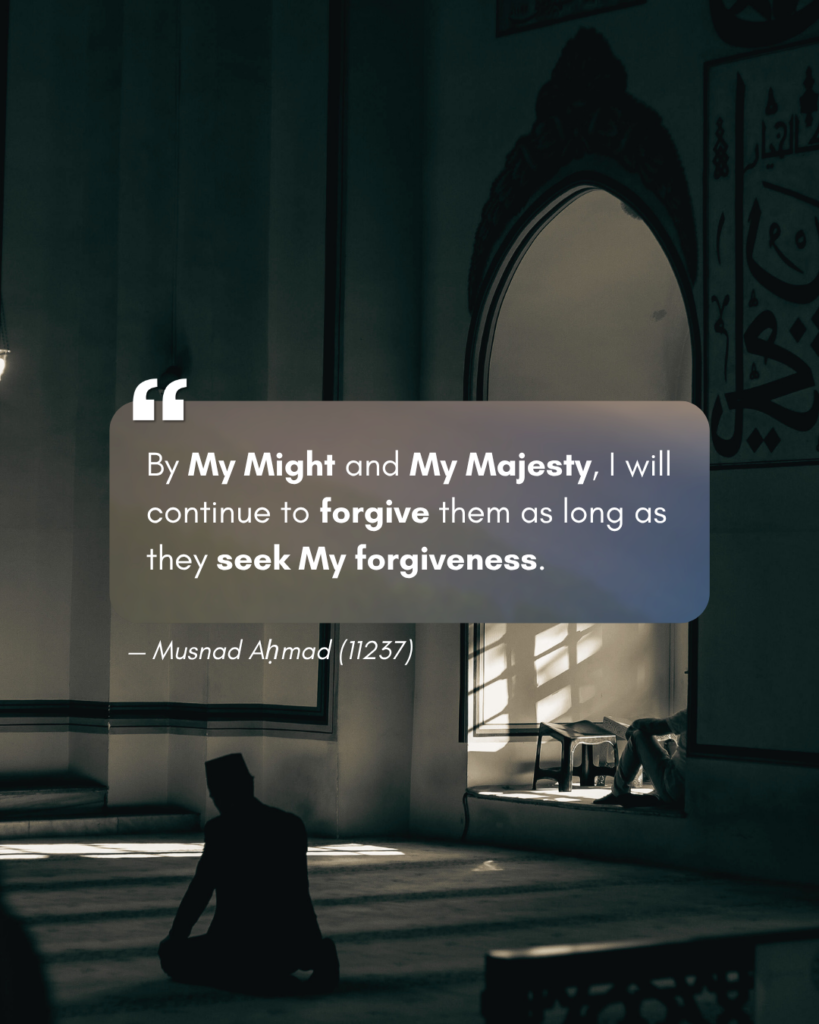
“By My Might and My Majesty, I will continue to forgive them as long as they seek My forgiveness.”
— Musnad Aḥmad (11237)
This single promise dismantles Shayṭān’s entire strategy. Because he relies on despair. He thrives on delay. He feeds on hopelessness. And repentance destroys all three.
Your Weapon Is Already in Your Hand
Your Nafs may be weak. Your Qalb may waver. Your Fitrah may feel buried. And Shayṭān may whisper relentlessly.
But your weapon is always available.
It is the weapon of return. The weapon of repentance. The weapon of Astaghfirullāh.
The test begins within. Your first defense is awareness. Your greatest weapon is turning back to Allāh.
So stand firm on this battlefield. Not with your own strength, but with the strength of the One who never abandons those who turn to Him.
May Allāh azza wa jall purify our hearts, strengthen our īmān, protect us from the whispers of Shayṭān, and keep our Fitrah shining until we meet Him. Āmīn yā Rabb al-‘Ālamīn.
Pingback: The Seven Under the Shade of Allah on Judgment Day